
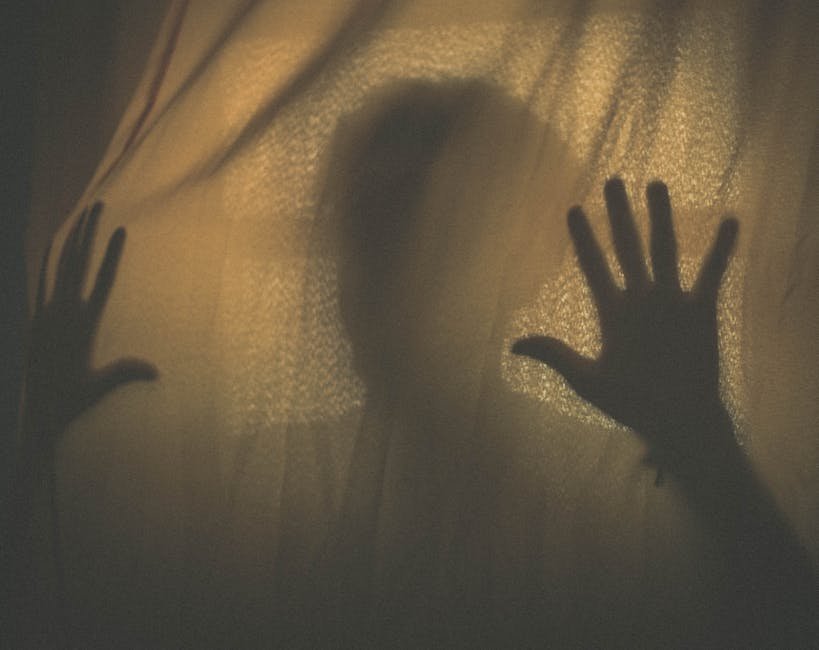
Anonymous Confession
I was a jerk to a girl in high school. That’s it, plain and simple. No fancy excuses, no tragic backstory that makes me the secret hero. Just a plain old jerk. And even now, all these years later, it sits in my gut like a lead weight, a sharp little shard of shame I can’t seem to dislodge.
There was this girl, let’s call her… well, let’s just call her ‘the girl.’ She wasn’t particularly flashy. She wasn’t trying to be the center of attention. If anything, she tried to fade into the background. She had this quiet intensity about her, always scribbling in a notebook, always with a faraway look in her eyes. I think she was an artist, or a writer, or just someone living in her own rich inner world. She dressed simply, didn’t wear much makeup, and her hair was often a bit wild, like she’d forgotten to tame it that morning. She was different, and in high school, “different” was a magnet for… well, for people like me.
I wasn’t a bad kid, not really. I wasn’t a bully in the violent sense. But I was insecure. I wanted to fit in, to be liked, to be seen as cool. And ‘the girl’ became an easy target for proving my worth to the crowd I desperately wanted to impress. Making fun of her, even subtly, got a laugh. It made me feel bigger, more powerful, momentarily forgetting how small I actually felt inside.
My jerky behavior wasn’t dramatic. It was insidious. It was the eye-rolls when she’d answer a question in class, even if her answer was perfectly valid. It was the snickers with my friends when she’d walk by, commenting on her worn-out backpack or her slightly mismatched socks. It was the whispered jokes about the elaborate doodles we sometimes glimpsed in her notebook, implying they were childish or weird. I never confronted her directly, never pushed her, never stole her things. My weapon was derision, exclusion, and making her feel like she didn’t belong.
There was one particular incident that sticks with me. We had a group project in history class, and by some cruel twist of fate, ‘the girl’ ended up in my group. My immediate reaction was internal groaning, but outwardly, I maintained my air of casual disdain. We were supposed to meet after school. She showed up with all her research meticulously organized, notes neatly typed, even some visual aids she’d drawn herself. She was clearly passionate about the topic. But every time she’d try to contribute, I’d cut her off, or make a sarcastic remark that would get a giggle from the other two members of our group. I remember her trying to explain a point about the Cold War, and I just scoffed, “Who cares about that? Just make it look good for the presentation, nobody’s reading your novel.” Her shoulders slumped. She just nodded, her eyes losing that spark they’d had moments before. We ended up getting a good grade, mostly thanks to her work, which I then presented as if it were all our collective effort, barely acknowledging her.
I never really thought about her feelings then. I saw her as an object, a prop in my desperate play for social acceptance. It wasn’t until years later, long after high school was a distant memory and I’d grown up a little (a lot, actually), that the full weight of my actions started to press down on me. I saw someone get treated similarly in a professional setting – someone intelligent, kind, and passionate, just trying to contribute, being subtly undermined and dismissed. And in that moment, it was like a lightning bolt. I saw ‘the girl.’ I saw her shoulders slump, her eyes dimming, the quiet withdrawal. I realized how deeply hurtful those small, everyday acts of casual cruelty can be. It wasn’t just a moment of embarrassment for her; it was a slow chipping away at her confidence, her sense of self-worth.
I often wonder where she is now. Is she still an artist, or a writer? Did my actions, and those of others like me, crush that passion, or did they fuel her to prove us all wrong? I hope it was the latter. I wish I could apologize. I wish I could tell her that I was wrong, that I was an insecure kid trying to look tough, and that her quiet strength and individuality were far more admirable than anything I was pretending to be.
I know I can’t change the past. I know an apology now would probably just be awkward, maybe even unwanted. But admitting it, even anonymously, feels like a small act of atonement. It’s a reminder to myself, every single day, to be kinder, to look beyond the surface, and to remember that every person has an inner world that deserves respect, not derision. I was a jerk in high school, and I carry that knowledge with me, hoping it makes me a better person today.